
Philip
Philip: The Practical Evangelist
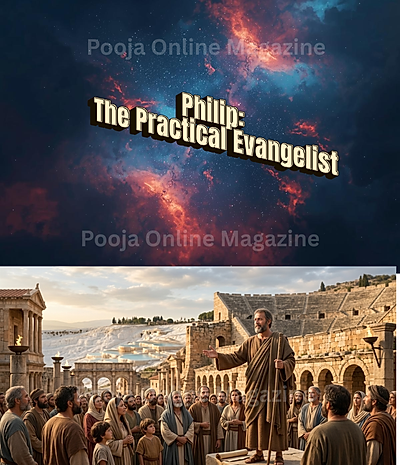
Philip: The Practical Evangelist
Among the Twelve, Philip is often remembered as a man of practical thought and direct action. A resident of the fishing town of Bethsaida, he was one of the earliest followers called by Jesus and played a vital role in expanding the reach of the early church into new cultures and territories.
The Call and the Search for Truth
Philip’s journey began with a simple, direct command from Jesus: "Follow me." Unlike others who might have hesitated, Philip immediately accepted the call and then sought out his friend Nathanael to share the news. When Nathanael expressed skepticism, Philip didn't argue with complex theology; he offered a practical solution: "Come and see."
This "come and see" approach defined Philip’s ministry. He was often the bridge between Jesus and those who felt like outsiders, such as the Greek travelers in Jerusalem who approached him when they wanted to meet the Teacher.
The Mission Beyond Borders
Following the events of Pentecost, Philip became a key figure in the expansion of the faith. He is frequently associated with the spread of the Gospel to the Hellenistic (Greek-speaking) world and beyond.
One of the most famous accounts linked to him is the conversion of the Ethiopian eunuch. As Philip traveled along the desert road from Jerusalem to Gaza, he encountered a high-ranking official from the court of the Queen of the Ethiopians. By explaining the scriptures to him and performing a baptism in the desert, Philip helped plant the seeds of Christianity in Africa.
Preaching in Phrygia
Philip eventually traveled to Phrygia, a region in modern-day Turkey. He settled in the city of Hierapolis, an ancient center known for its thermal springs and religious significance. There, he preached with great success, converting many to the new faith. However, his message challenged the local traditions and the Roman authorities, leading to increasing tension within the city.
Martyrdom in Hierapolis
In approximately 80 AD, Philip’s mission in Hierapolis came to a violent end. Historical traditions and early church records, such as those by Polycrates of Ephesus, suggest that Philip was arrested by the local governor.
He was subjected to a brutal series of punishments, including being scourged (beaten) before the crowds. Most accounts agree that he was then executed by crucifixion. Traditional stories add a unique detail: Philip was reportedly crucified not by nails, but by being hung from his ankles or bound to a pillar. Even in his final moments, he is said to have encouraged his followers to remain steadfast.
Legacy and Rediscovery
For centuries, the exact location of Philip's burial was a mystery. However, in 2011, archaeologists in Hierapolis (Pamukkale, Turkey) discovered a 1st-century tomb within a structure known as the "Martyrium of St. Philip." This discovery provided significant historical backing to the ancient traditions surrounding his death and burial in that city.
Philip is remembered today as the Apostle who invited the world to "come and see," proving that simple, direct faith can cross any border.
